Buying & Collecting David Hockney Prints
David Hockney prints range from relatively low-priced/accessible original posters to highly sought-after signed small editions that can stretch to millions of dollars. Knowing the difference between editions, signatures, papers and print types is essential when buying.
What affects the value of a Hockney print?
Image desirability, rarity, date, edition size, signature, condition and provenance are the main factors, along with what is happening 'in the market': although Hockney prices were already very strong, the death of the artist in June 2026 re-ignited interest in his works for many people, and a potential major retrospective can create the same interest, encouraging prices to increase.
How can I tell if a David Hockney print is authentic?
Authenticating a Hockney print is rarely about one feature alone. The most reliable approach is to check that the work matches the recognised edition in terms of medium, paper, sheet size, image size, edition details, signature, printer, publisher and catalogue reference, and this information is often online in the form of sales results, or the artist's Catalogue Raisonne. Provenance can add reassurance, but it should support the physical evidence rather than replace it. Additional details such as paper type, blindstamps, inscriptions and the exact position of the signature and edition number can all help confirm that a work corresponds with the documented edition.
What should I look for in a David Hockney signature?
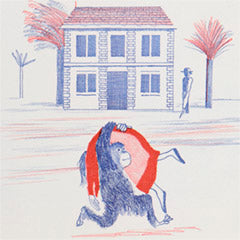
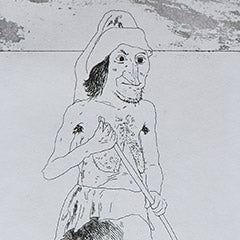
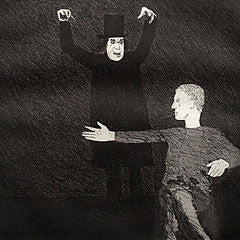
The artist's signature has changed naturally over a long career, so there is no single 'correct' version to look for. On many limited-edition prints it appears in pencil, often alongside the edition number. Just watch out for a 'printed' signature which is sometimes as it should be (for instance on a poster) but if the other prints in the same edition are hand signed, that's a red flag. Be wary of prints with no signature unless they form an 'unsigned' edition which has been documented as such. A good example is Hockney's Illustrations for Six Fairy Tales from the Brothers Grimm (1969/1970) which has s a book edition of 400 copies (divided into four variants of 100 plus artist's proofs) featuring original etchings with aquatint that are unsigned and unnumbered.
What do edition numbers and proof markings mean on Hockney prints?
Most editioned Hockney prints were produced in a fixed number of impressions, with each example usually numbered in pencil, for example 32/100 - print number 32 from the total run of 100. There may also be artist’s proofs (AP), printer’s proofs (PP), publisher’s proofs (sometimes BAT or Bon a Tirer/good to go) HC (Hors Commerce/commercial edition) or other impressions outside the numbered edition. These can be entirely legitimate and sometimes scarce, but they should correspond with the documented edition. A proof is not automatically more valuable or rare simply because it is marked AP!
Does condition matter when buying a Hockney print?
Condition can have a significant effect on desirability and value, especially with rarer or more expensive prints. Fading, paper discolouration, foxing, creases, trimming, staining, old tape and poor mounting can all affect value, although not every imperfection is equally serious. When buying it is important to understand what may be hidden underneath a frame: if the full sheet is not visible, a dealer should be happy to give you a photograph of description of the unframed sheet. A minor condition issue may be perfectly acceptable if it is clearly described and reflected in the price; more serious fading or alteration to the sheet is generally more important, so be sure to ask before buying.
How to tell the difference between original prints and reproductions?
An 'original' print is a work created by the artist specifically as a work in its own right, using a printmaking process such as etching, lithography or screenprinting, usually printed in a limited edition and hand-signed. An original print is NOT simply a photographic reproduction of a painting or drawing the artist has done earlier (although just to confuse things, some reproductions of artist's paintings were specially commissioned in limited numbers and then hand signed by the artist). It's vital to check the information about the edition if you aren't sure.